"The Collection of Monsieur G."
Imperial Russian Militaria
September 17 & 18, 2026
Hôtel Drouot, Paris.
Rooms 1–7
-
On September 17 and 18, Millon and the Giraudeau auction house will present a major two-day sale dedicated to Imperial Russian militaria. The auction brings together—across three sessions—more than 800 items from the collection of a French enthusiast of Russian descent who dedicated his life to researching and preserving historical artifacts linked to the Russian Empire and the White émigré community.
Assembled over decades across Europe and beyond, this collection—unique in the world in its museum-quality scope—includes military uniforms and headgear, regimental flags, sabers and firearms, decorations and orders of chivalry, photographs and archives, as well as books and historical memorabilia. Together, they bear witness to the military and ceremonial world of Imperial Russia up to 1918.
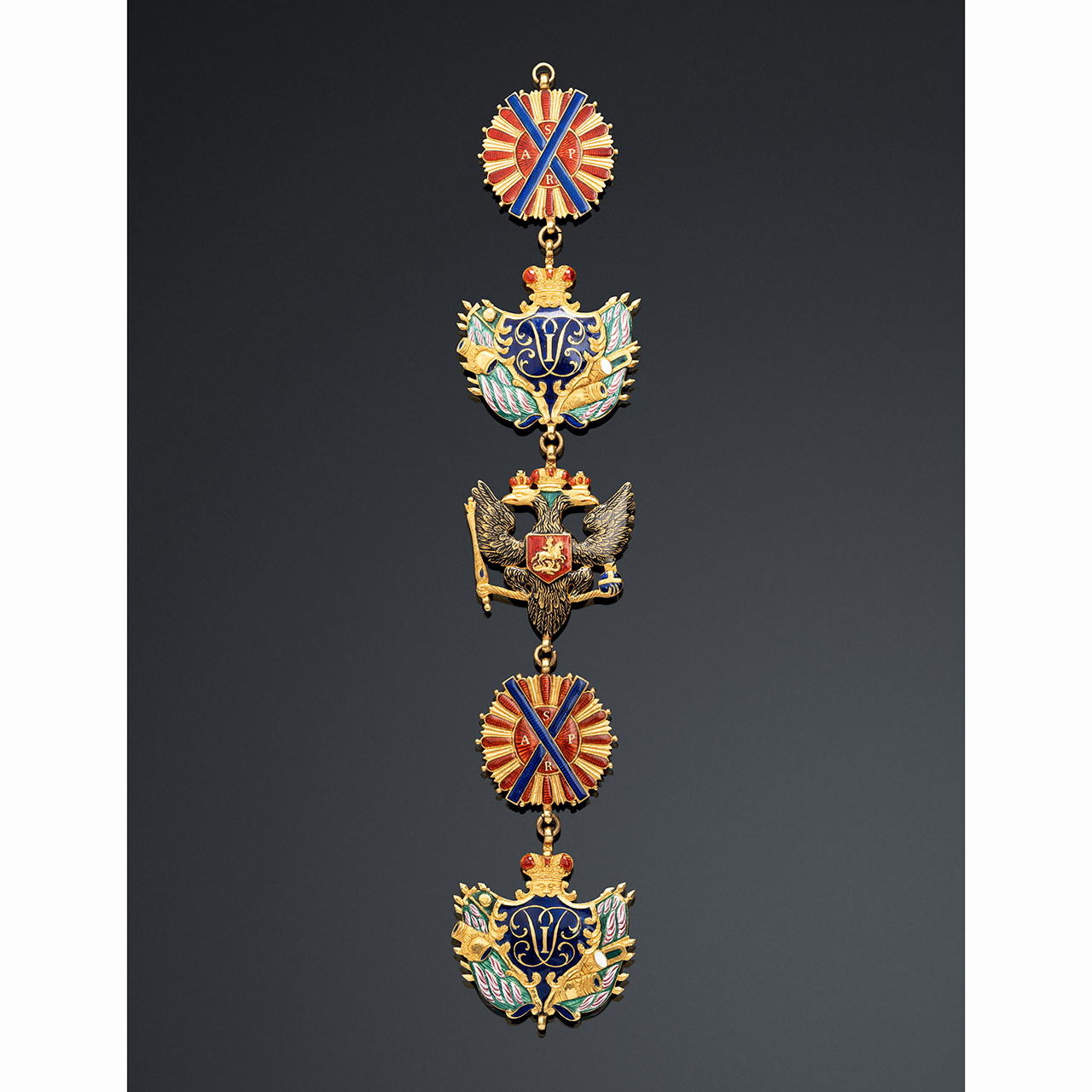
Highlights of the sale include two regimental flags (along with rare ribbons and flag finials), a Guard Hussar sabretache bearing the cipher of Nicholas II, a silver St. George trumpet, a saber from the era of Catherine II, a military volume from the library of Platon Zubov, a pair of shoulder boards and a cap that belonged to Tsar Nicholas II, and a section of the collar of the Order of St. Andrew dating from the reigns of Paul I and Alexander I.
Beyond their rarity, these objects tell the story of a collector’s passion and of a heritage scattered across the globe following the fall of the Russian Empire. The sale will particularly highlight the elegance of the Russian uniforms and headdresses worn by various Imperial Army regiments, the symbolic richness and craftsmanship of the goldsmiths who created civil and military decorations, and the museum-quality nature of the collection.
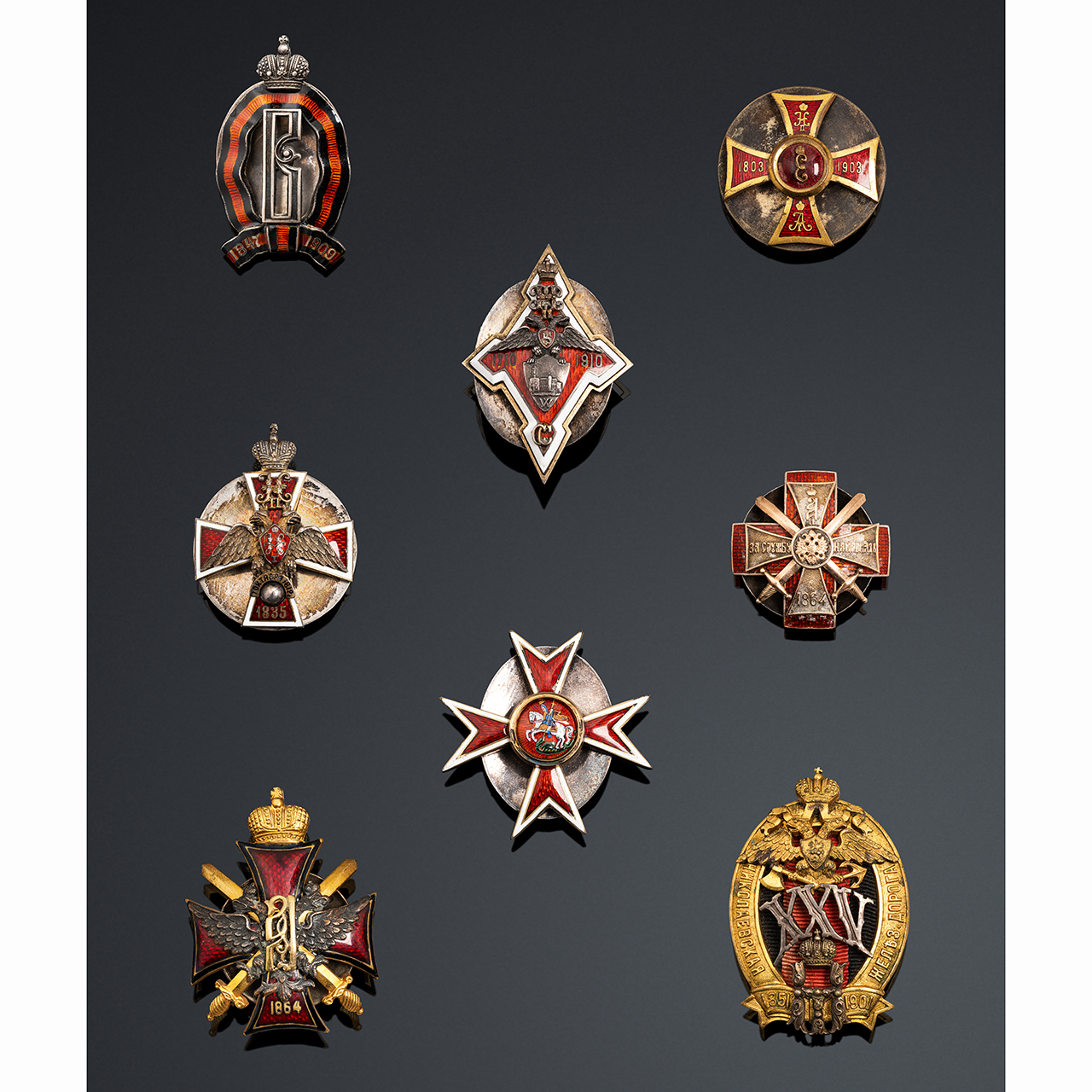
Far more extensive, this second part comprises 364 lots and brings together three major categories: edged weapons, orders and decorations, and insignia and tokens. It offers an overview of the military and honorary symbolism of the Russian Empire, spanning from the 18th century to the First World War.
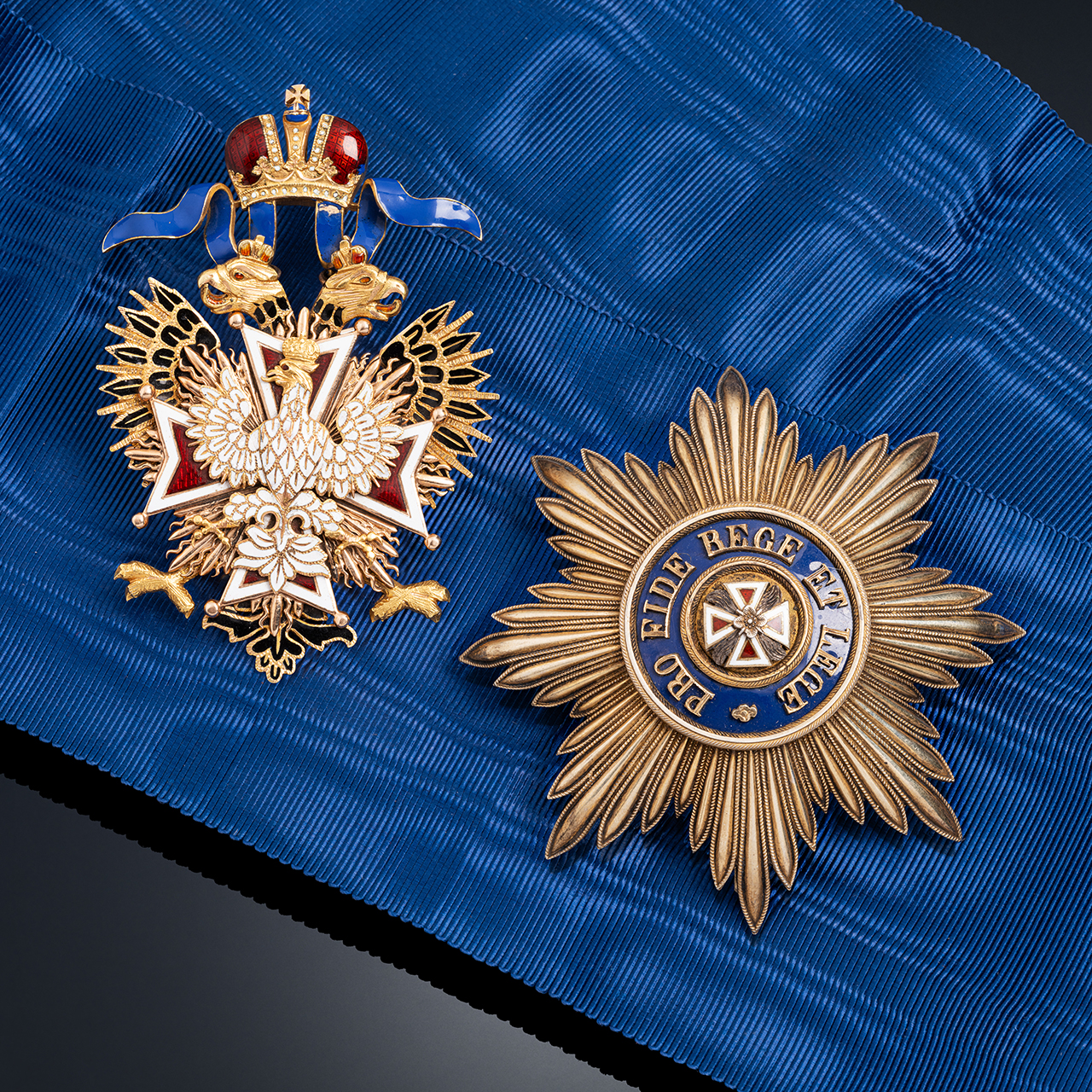
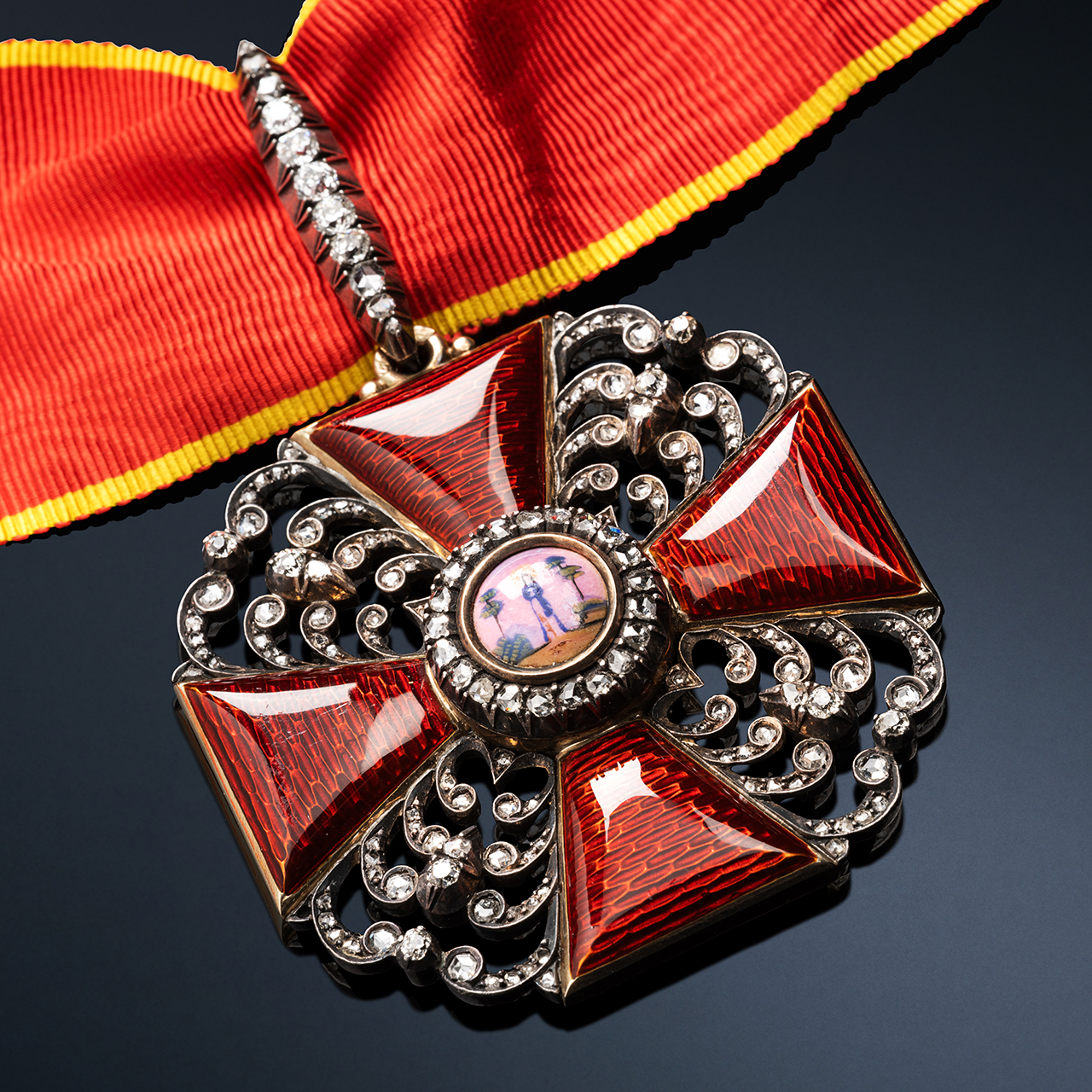
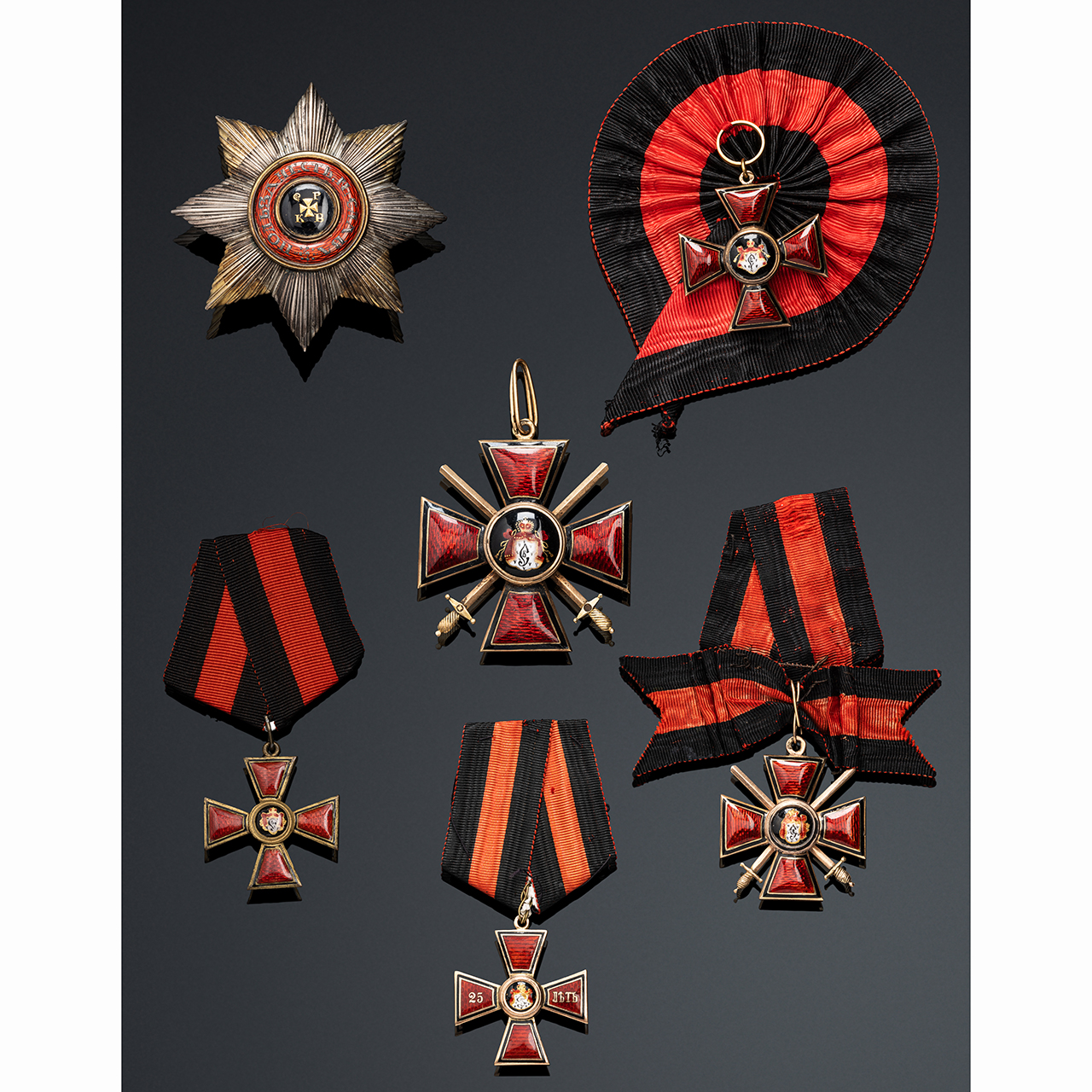
The edged weapons include, notably, spontoons, *pallasches* (heavy cavalry swords), sabers, *shashkas*, and officers' daggers—often associated with the Imperial Guard, the Cossacks, or major military orders. The opening lots feature, for instance, a rare spontoon likely from the Semenovsky Regiment under Paul I and an Imperial Horse Guard *pallasch* bearing the cipher of Catherine II. The decorations section is particularly rich in examples of the Orders of St. Andrew, St. George, St. Anne, St. Vladimir, and St. Stanislaus, among others, featuring high-quality gold and enamel pieces. A fragment of a collar of the Order of St. Andrew the First-Called, dating to around 1800, carries an estimate of €6,000–€8,000, for example.
This sale is arguably the most focused on *phaleristics* (the study of orders and decorations) of the three: it highlights the hierarchy, awards, and traditions of the Empire's officers. Certain "For Bravery" weapons and St. George decorations lend the collection a particularly prestigious and personal dimension. A rare 4th-class St. George Cross for 25 years of service, for instance, is reasonably estimated at €4,000–€6,000.